
Beamery Review: AI Workforce Intelligence and Talent Platform
 Mar 24,2026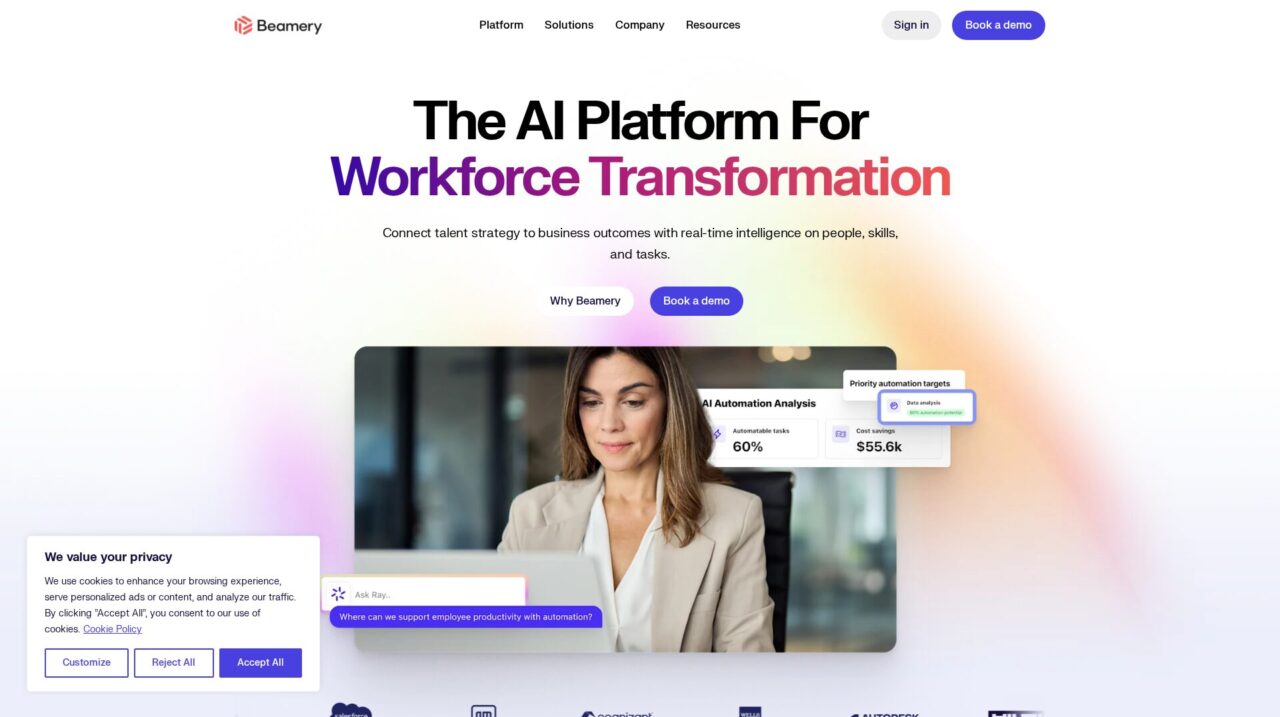

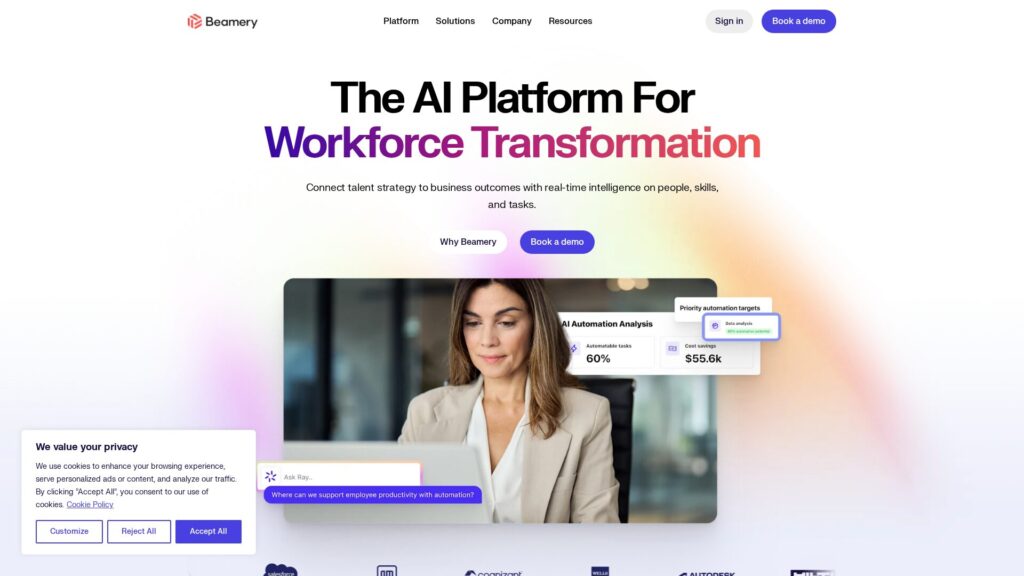
Beamery is an AI-powered workforce intelligence and talent management platform for large enterprises that want to plan, attract, develop, and redeploy skills more strategically across the employee lifecycle.
After analyzing Beamery in depth across its modules, integrations, and real-world enterprise deployments, this review summarizes how well it actually delivers on AI-powered workforce transformation. The goal is to help you decide whether it fits your talent and HR strategy, not just to restate product marketing.
If you are still exploring the broader landscape of HR and talent tools, it is also worth comparing Beamery conceptually with other platforms in the wider HR and payroll software category often covered in our roundups. That broader view can clarify whether you truly need a workforce intelligence platform or a more conventional HRIS or ATS.
Beamery has become a well-known name among large enterprises looking to become more skills-based and data-driven in their hiring, internal mobility, and workforce planning. Despite that reputation, there are meaningful tradeoffs around implementation effort, cost, and organizational readiness that buyers should weigh carefully.
In this review, you will learn where Beamery excels, where it falls short, and which types of organizations it serves best. We will look at its key features, real advantages and limitations, and how it fits into an HR tech stack anchored by systems like Workday and SAP, so HR leaders, TA teams, and executives can make a confident decision.
Beamery Review Summary
Beamery stands out as a sophisticated workforce intelligence and talent management layer for enterprises that want to manage skills and talent pipelines strategically. Its strengths lie in skills-centric data modeling, AI-driven matching and insights, and tight alignment with core HR systems, which together support better hiring, reskilling, and workforce planning decisions.
However, Beamery is not a lightweight solution. It requires serious implementation effort, data integration, and change management, and is most appropriate for larger organizations with the scale and maturity to take advantage of its capabilities. For those organizations, it can justify its complexity and cost by unlocking deeper visibility into workforce skills and enabling more informed decisions about talent and the future of work.
How We Review Tools and Assign the CX Score
We've developed a comprehensive scoring system to evaluate software tools objectively. Our CX Score (1.0–5.0) reflects how strong a product is within its category, based on hands-on testing and analysis across multiple criteria.
Core Functionality
Does the tool deliver the essential features users expect? We assess whether core capabilities meet category standards and if key features are accessible across pricing tiers.
Standout Features
We evaluate unique capabilities that go beyond the basics—features that make the product faster, more efficient, or offer additional value compared to competitors.
Ease of Use
How intuitive is the interface? We consider design quality, mobile apps, templates, and whether complex tasks feel simple to execute.
Onboarding
We measure how quickly new users can get productive with minimal training. High-scoring tools require little to no external support to get started.
Integrations
We assess native integrations, third-party connections, and API access. Tools that connect easily with common tech stacks score higher.
Customer Support
How easy is it to get help? We evaluate support channels, response times, and quality of documentation. Real-time human support scores best.
Value for Money
We compare pricing against features delivered. Software that offers more functionality at competitive prices receives higher marks.
Features of Beamery
- AI-powered skills inference
- Workforce planning and scenario modeling
- Recruitment CRM and talent pipelining
- Applicant tracking capabilities
- Candidate experience and career site tools
- Internal mobility and talent marketplace
- Diversity and inclusion analytics
- Executive dashboards and talent risk insights
- Workday integration
- SAP integration
- Open API
- Single sign-on (SSO)
- GDPR compliance features
- Role-based permissions and governance
- Email and calendar integrations
- Mobile-responsive candidate experiences
- On-premise deployment
- Best suited for large enterprises
Skills-Centric Workforce Intelligence for Strategic Planning
Beamery’s workforce intelligence capabilities center around a dynamic view of skills across your organization and candidate universe. It aggregates data from core HR systems, recruiting tools, and other sources, then applies AI to infer skills, potential, and readiness. This allows leaders to see where skills sit today, where gaps will emerge, and how different strategic scenarios around automation, new markets, or restructuring will play out.
Compared with traditional HR analytics, which often focus on headcount and turnover, Beamery’s skills orientation lets you plan based on capabilities rather than just roles. That makes it particularly valuable for organizations moving toward skills-based planning and needing to answer whether to hire, reskill, or automate in each part of the business.
AI-Enhanced Talent Acquisition and Candidate Matching
For recruiters, Beamery provides AI-enhanced search and matching that goes beyond simple keyword filters. It analyzes resumes, profiles, and prior interactions to infer skills and suggest candidates who may not be obvious from job titles alone. Recruiters can then quickly assemble shortlists and talent pools that reflect both experience and potential, while also tracking diversity and other hiring objectives.
This focus on intelligent matching helps large recruiting teams cope with volume and complexity, and it compares favorably with legacy ATS modules where search is rigid and manual. While AI recommendations still require human oversight, they meaningfully reduce the time to identify relevant candidates, especially for roles with non-standard career paths.
Candidate Engagement and Personalized Experiences
Beamery offers capabilities for building richer candidate experiences, including career sites, landing pages, and personalized job recommendations. Its AI can surface relevant roles based on a candidate’s skills and interests, giving them a clearer path to career success and improving application conversion rates. Campaign tools allow talent teams to nurture relationships with silver medalists and passive talent over time.
Compared to basic job board-style career pages, this creates a more consumer-grade journey for candidates and strengthens employer branding. Enterprises that compete heavily for scarce skills can use these capabilities to differentiate themselves and maintain warm relationships with critical talent segments even when there is no immediate opening.
Internal Mobility and Talent Marketplace Capabilities
Beamery supports internal mobility and talent marketplaces by leveraging the same skills graph used for recruiting. Employees can discover internal roles, projects, or learning opportunities that align with their skills and aspirations, while managers and HR teams gain visibility into internal supply before going to the external market. This encourages retention, supports reskilling initiatives, and helps organizations use their existing workforce more efficiently.
While some customers will still pair Beamery with dedicated learning or performance systems, its internal mobility features commonly exceed what is available in out-of-the-box HRIS modules. For organizations trying to operationalize a skills-based, internal-first hiring culture, this can be a significant advantage.
Executive Dashboards and Talent Risk Insights
Executives and senior HR leaders use Beamery’s dashboards to understand talent risks, progress on strategic initiatives, and the health of hiring pipelines across the business. Metrics related to skills coverage, time to fill, diversity, and internal movement are surfaced in an accessible way, helping leaders move from anecdote-driven to data-driven decisions.
These views distinguish Beamery from point tools that only serve recruiters or only focus on analytics. By tying insights directly to people, roles, and skills at scale, Beamery gives executives a clearer sense of where talent constraints could impede business strategy, and where proactive interventions are needed.
Deep Integrations with Workday, SAP, and Core HR Systems
Beamery integrates with major HR platforms like Workday and SAP, acting as an intelligence layer that connects and enhances the underlying data. This is crucial for large enterprises that do not want to replace their core HCM systems, but still need more flexible and insightful talent capabilities. Customer testimonials often cite close connections to Workday and talent intelligence hubs as a deciding factor.
Relative to light-touch integrations common in mid-market tools, Beamery’s focus is on robust, bi-directional data flows that keep skills profiles, job data, and employee records aligned. That reduces duplication of work across tools and ensures that insights from Beamery can inform downstream HR processes such as performance, succession, and compensation.
Beamery’s user experience is modern and thoughtfully designed for its different personas, but it reflects the complexity of an enterprise platform. Recruiters, HR leaders, and executives each have tailored views, which helps with adoption once the system is configured. Day-to-day tasks like searching for talent, reviewing recommendations, and running campaigns are generally intuitive for users familiar with contemporary SaaS tools.
The main learning curve comes from understanding and operationalizing the underlying concepts: skills taxonomies, AI-driven matching, and scenario-based workforce planning. Admins and program owners should expect a structured onboarding period with training, sandbox experimentation, and ongoing enablement. For organizations willing to invest that time, the payoff is a powerful system that feels natural in daily use, but it is not a plug-and-play solution for teams expecting instant simplicity.
Beamery is built to complement, not replace, core HR and recruiting infrastructure in large enterprises. It integrates with systems like Workday and SAP, as highlighted by customer statements emphasizing its connection with Workday and SAP talent intelligence hubs. These integrations enable Beamery to read and write key data, enrich profiles with AI-driven skills insights, and keep workforce intelligence aligned with authoritative HR records.
Beyond major HCM platforms, Beamery typically connects to ATS tools, sourcing platforms, email and calendar systems, and other elements of the talent tech stack. While detailed integration catalogs are generally shared during the sales process, buyers should confirm support for their specific ATS, HRIS, and sourcing channels, as well as the availability of APIs or middleware for bespoke connections. The platform is clearly optimized for complex, integrated enterprise environments rather than isolated, standalone deployments.
Beamery Overview
Pros
- Strong skills-centric workforce intelligence and AI capabilities for strategic planning
- Deep support for enterprise talent acquisition, internal mobility, and candidate engagement
- Robust integrations with Workday, SAP, and other core HR systems
- Modern recruiter and candidate experiences that go beyond a basic ATS
- Well-suited for organizations moving toward skills-based workforce strategy
- Helps unify and enrich fragmented HR and talent data across multiple systems
Cons
- Implementation and change management effort can be significant for new customers
- Best suited to large enterprises, often overkill for smaller organizations
- Pricing is quote-based and typically oriented toward higher enterprise budgets
- Relies heavily on data quality and skills taxonomies, which require ongoing governance
- Feature depth and configuration options add complexity for admins and program owners
Beamery: Frequently Asked Questions
What type of companies is Beamery best for?
Beamery is best suited to large and global enterprises that want to manage skills strategically, improve recruiting and internal mobility, and integrate closely with core HR systems like Workday and SAP.
Is Beamery a replacement for my HRIS or ATS?
Beamery is designed to sit alongside systems like Workday, SAP, and existing ATS platforms as an intelligence and engagement layer, rather than fully replacing a core HRIS.
How complex is it to implement Beamery?
Implementation usually involves data integrations, skills taxonomy setup, and process design, so enterprises should plan for a structured, multi-phase rollout with stakeholder and change management.
Does Beamery support internal mobility and talent marketplaces?
Yes, Beamery leverages its skills graph to power internal mobility, enabling employees to discover roles and opportunities that match their skills and aspirations.
How does Beamery use AI in talent decisions?
Beamery uses AI to infer skills, recommend candidates and internal matches, and surface workforce insights, while providing controls for ethical and compliant use of those algorithms.
Can Beamery integrate with Workday and SAP?
Yes, Beamery is built to connect with systems like Workday and SAP, enriching their data with workforce intelligence and feeding insights back into HR and talent processes.
Is Beamery suitable for small businesses?
Typically no, Beamery is oriented toward complex, large-scale talent environments and will be more than smaller organizations need from a cost and complexity perspective.
What teams use Beamery day to day?
Recruiters, talent marketers, HR business partners, and workforce planning teams are primary users, with executives and line leaders consuming dashboards and insights for strategic decisions.
