
Glassdoor Review: Job Search & Employer Insights Platform
 Mar 18,2026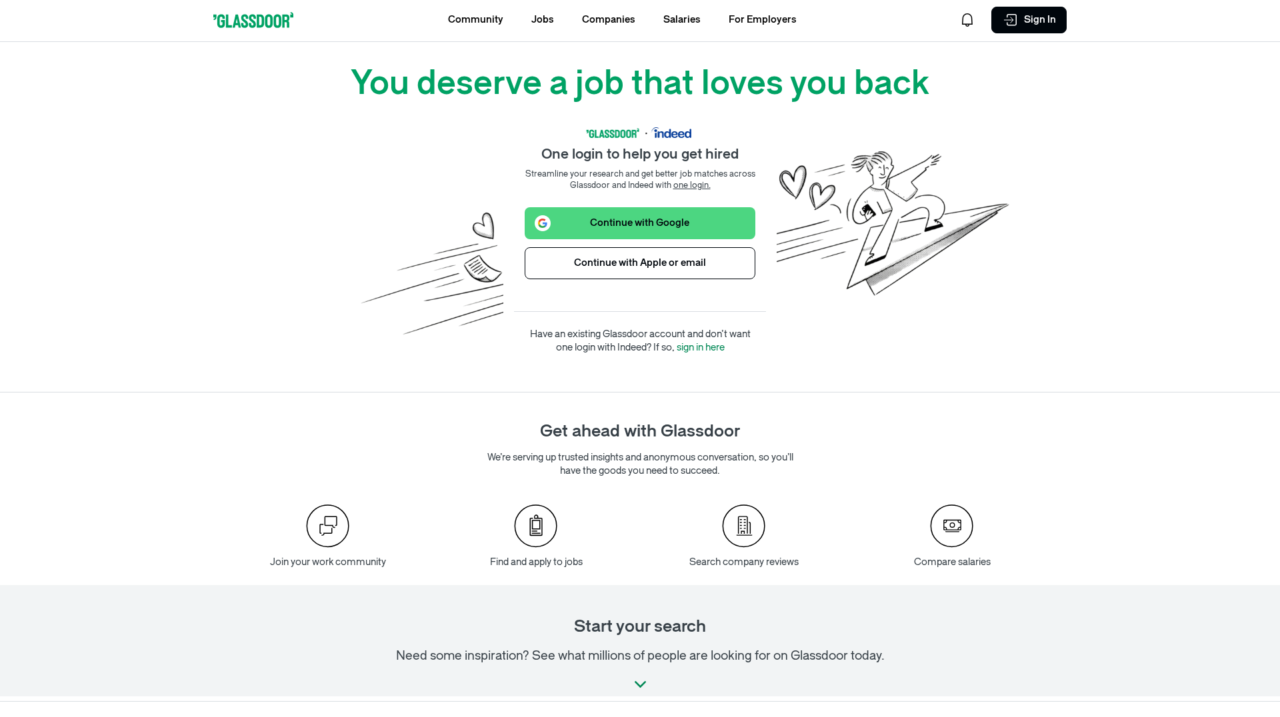

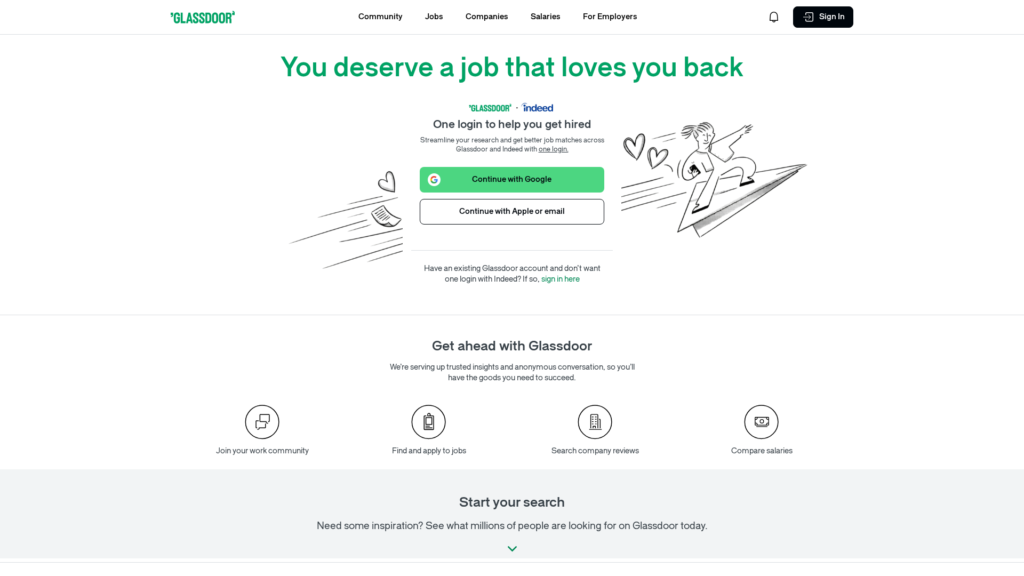
Glassdoor is a job search and employer review platform where candidates research companies, salaries and interviews, and employers build and manage their employer brand.
I have evaluated Glassdoor as both a candidate research tool and an employer branding and recruiting channel, and this review brings those perspectives together for a balanced assessment. If you are just starting to compare options in this space, it sits within the broader category of job search and employer review platforms, which we cover in more depth in our job-boards-and-talent-marketplaces comparison on CX Everywhere.
Glassdoor is widely known among job seekers as a go to site for checking company reviews and salaries, and among talent teams as a key external channel they need to monitor. Despite that familiarity, its strengths and limitations are not always obvious until you try to rely on it day to day for hiring or for a serious career move.
In this review, you will learn where Glassdoor excels, where it falls short, how its core features actually play out in real workflows and when it is likely to be the right fit for you. The focus is on practical guidance for candidates, HR and TA leaders, and hiring managers evaluating employer brand and sourcing strategies.
At its core, Glassdoor aims to solve the opacity of the labor market by surfacing real employee experiences, salaries and interview details alongside job postings. That transparency changes how people search for roles, how they negotiate and how employers position themselves to attract the right talent.
Glassdoor Review Summary
Overall, Glassdoor provides a strong, well rounded foundation for both sides of the hiring market. Candidates get unprecedented visibility into company culture, compensation and interview processes, while employers gain a recognized channel to showcase their brand and reach engaged applicants. This combination is more comprehensive than most traditional job boards or simple review sites.
However, its value depends heavily on the density and quality of data for the organizations and locations you care about, and on employers’ willingness to engage with feedback rather than ignore it. Used thoughtfully as one signal among many, Glassdoor is a high impact tool, but it should not be treated as an infallible source of truth.
How We Review Tools and Assign the CX Score
We've developed a comprehensive scoring system to evaluate software tools objectively. Our CX Score (1.0–5.0) reflects how strong a product is within its category, based on hands-on testing and analysis across multiple criteria.
Core Functionality
Does the tool deliver the essential features users expect? We assess whether core capabilities meet category standards and if key features are accessible across pricing tiers.
Standout Features
We evaluate unique capabilities that go beyond the basics—features that make the product faster, more efficient, or offer additional value compared to competitors.
Ease of Use
How intuitive is the interface? We consider design quality, mobile apps, templates, and whether complex tasks feel simple to execute.
Onboarding
We measure how quickly new users can get productive with minimal training. High-scoring tools require little to no external support to get started.
Integrations
We assess native integrations, third-party connections, and API access. Tools that connect easily with common tech stacks score higher.
Customer Support
How easy is it to get help? We evaluate support channels, response times, and quality of documentation. Real-time human support scores best.
Value for Money
We compare pricing against features delivered. Software that offers more functionality at competitive prices receives higher marks.
Features of Glassdoor
- Employer reviews and ratings
- Job search and listings
- Salary insights by role and company
- Interview reviews and questions
- Employer branded company profiles
- Review response tools for employers
- Global, multi country support
- Mobile apps
- Applicant tracking system integrations
- Analytics on company ratings over time
- Anonymous user contributions
- Programmatic job advertising
- API access
- Built in applicant tracking
- Built in HRIS/HR suite
Transparent Company Ratings and Reviews to Vet Employers
Glassdoor’s most visible feature is its database of company ratings and written reviews from current and former employees. Users can see overall satisfaction scores and breakouts for culture, work life balance, compensation, career opportunities and leadership, then read detailed pros and cons. This empowers candidates to avoid employers with systemic issues and prioritize those with consistently strong feedback, something standard job boards cannot offer.
In practice, this means you can quickly sense whether a company is improving, stagnating or deteriorating over time by looking at trends and recurring themes. For HR teams, this visibility can highlight both strong differentiators to promote and recurring pain points that need addressing as part of a broader engagement strategy.
Integrated Job Search with Employer Context
Glassdoor’s job search engine combines traditional filters like title, location and salary with embedded employer information. Job listings frequently display the company rating and links back to reviews and salaries, so candidates never evaluate a posting in isolation. This tight integration reduces the friction of bouncing between separate job boards, corporate sites and research tools.
Compared to many niche boards, this creates a more informed and efficient funnel: candidates who apply after seeing ratings and reviews tend to be more aligned with the employer, which can improve interview hit rates and reduce late stage surprises about culture or compensation.
Salary Insights for Smarter Negotiations
Through self reported salary entries, Glassdoor offers pay ranges for specific roles at specific companies and in specific locations. Users can explore typical base pay, bonuses and in some cases equity, then compare that information across employers. This is particularly valuable in opaque or high variance fields, where official salary bands are rarely published.
While not a replacement for market compensation surveys, these insights give candidates a stronger anchor for negotiations and help employers understand how their offers will be perceived relative to peers. It moves conversations away from guesswork and toward data informed expectations, even if the underlying numbers are not perfectly precise.
Interview Reviews to Demystify Hiring Processes
Glassdoor also hosts interview reviews where candidates share details about their experience with a company’s hiring process. These typically cover stages, timeframes, perceived difficulty and example questions. For job seekers, this allows better preparation and reduces anxiety by clarifying what to expect.
Recruiting teams can use this feedback to benchmark their process efficiency and candidate experience against others in their industry. Patterns of extremely long timelines, confusing communication or repeated negative experiences are strong signals that internal process improvements are needed.
Employer Profiles for Brand Storytelling
Organizations can claim and enhance their Glassdoor company profile to tell a more complete story about who they are and why people should work there. These profiles can include mission statements, values, benefits highlights, photos, videos and featured reviews, sitting alongside the aggregate rating and unfiltered employee feedback.
This dual perspective helps candidates balance polished messaging with real world experiences. Relative to a standalone careers site, the combination of employer controlled content and employee voices on a neutral platform generally carries more credibility for skeptical candidates.
Review Response and Reputation Management Controls
Glassdoor allows employers to publicly respond to reviews, which is critical for reputation management. HR and leadership can acknowledge issues, provide context, share changes made and thank employees for feedback. This dialogue shows candidates that the company is listening and can soften the impact of negative reviews when handled thoughtfully.
For many organizations, these responses become part of a larger listening strategy that connects external feedback with internal engagement initiatives. Compared with review sites that do not allow responses or charge heavily for basic controls, Glassdoor’s approach is relatively employer friendly while still protecting reviewer anonymity.
Global Coverage and Localized Experiences
Glassdoor supports multiple countries and languages, giving both candidates and employers access to localized job markets and employer information. Users in different regions can search for roles in their currencies, see reviews relevant to their local offices and engage with content aligned to their market.
While the richness of data still varies considerably by country, this global footprint differentiates Glassdoor from smaller regional players and makes it viable for multinational organizations that want a consistent employer brand presence across markets.
Glassdoor is designed to be intuitive for both sides of the platform. Job seekers can quickly search for roles, filter results, view company profiles and read reviews without needing any training. Account creation is straightforward, and contributing a review, salary or interview experience is guided by structured forms that lower the barrier to participation while encouraging useful detail.
For employers, the main learning curve is in claiming and configuring the company profile, setting up access for the HR or employer brand team and defining a consistent review response approach. Once configured, day to day use consists of monitoring new reviews, responding where appropriate, updating profile content and coordinating with the recruiting team on promoted roles. Compared to heavy HRIS or ATS platforms, Glassdoor is light to administer, but organizations should still assign clear ownership to ensure it is used proactively rather than reactively.
Glassdoor primarily integrates into the broader recruiting ecosystem rather than into back office systems. Many applicant tracking systems and recruitment marketing platforms can push job postings to Glassdoor or track candidates that originate from the platform, helping talent teams understand source performance and ROI. Employers often link Glassdoor profiles and reviews from their careers site and outbound campaigns to provide social proof.
For buyers, the key due diligence is to confirm whether their existing ATS or recruitment CRM can report on Glassdoor as a distinct source, and whether there are any specific integrations available for sponsored jobs or branded content. Glassdoor does not try to be a full HR platform, so do not expect deep integrations into payroll, performance or core HR; think of it instead as a specialized top of funnel and reputation channel that should sit alongside your core HR tech stack.
Glassdoor Overview
Pros
- Extensive database of employer reviews, ratings and salary insights
- Integrated job search with company context in one interface
- Interview reviews help candidates prepare and reduce surprises
- Employer profiles and responses support strong employer branding
- Global coverage with localized experiences in many countries
- Intuitive web and mobile experience for non technical users
- Useful listening channel for HR to spot culture and process issues
Cons
- Crowdsourced data can be biased or incomplete for some employers
- Depth of reviews and salary data varies greatly by company and country
- Smaller or newer companies may have too few reviews to be meaningful
- Employers must invest time to monitor and respond to feedback
- Not a full recruiting or HR system, requires other tools for end to end hiring
Glassdoor: Frequently Asked Questions
Is Glassdoor free for job seekers?
Yes, job seekers can search jobs, read reviews, view salaries and contribute their own content for free.
How does Glassdoor make money?
Glassdoor primarily generates revenue from employers through sponsored jobs, employer branding products and recruitment advertising services.
Can employers remove negative reviews on Glassdoor?
Employers cannot arbitrarily remove negative reviews; content is moderated against guidelines, but critical feedback generally remains visible even when a company disputes it.
How reliable are Glassdoor salary estimates?
Glassdoor salaries are self reported and should be treated as directional ranges, best used alongside other market data rather than as exact benchmarks.
Is Glassdoor suitable for small businesses?
Yes, but small businesses may have limited review volume, so they should actively encourage balanced feedback and use the profile to tell their story.
Does Glassdoor replace an ATS or HR system?
No, Glassdoor is a job search and employer review platform and should complement, not replace, your ATS and core HR tools.
Can companies respond to reviews on Glassdoor?
Yes, verified employer representatives can publicly respond to reviews, which helps provide context and demonstrate that feedback is taken seriously.
Is Glassdoor useful outside the United States?
Glassdoor supports many countries and languages, but data density is strongest in larger markets, so usefulness will vary by region.
