
Kudos Review: Employee Recognition & Rewards Platform Explained 2026
 Feb 18,2026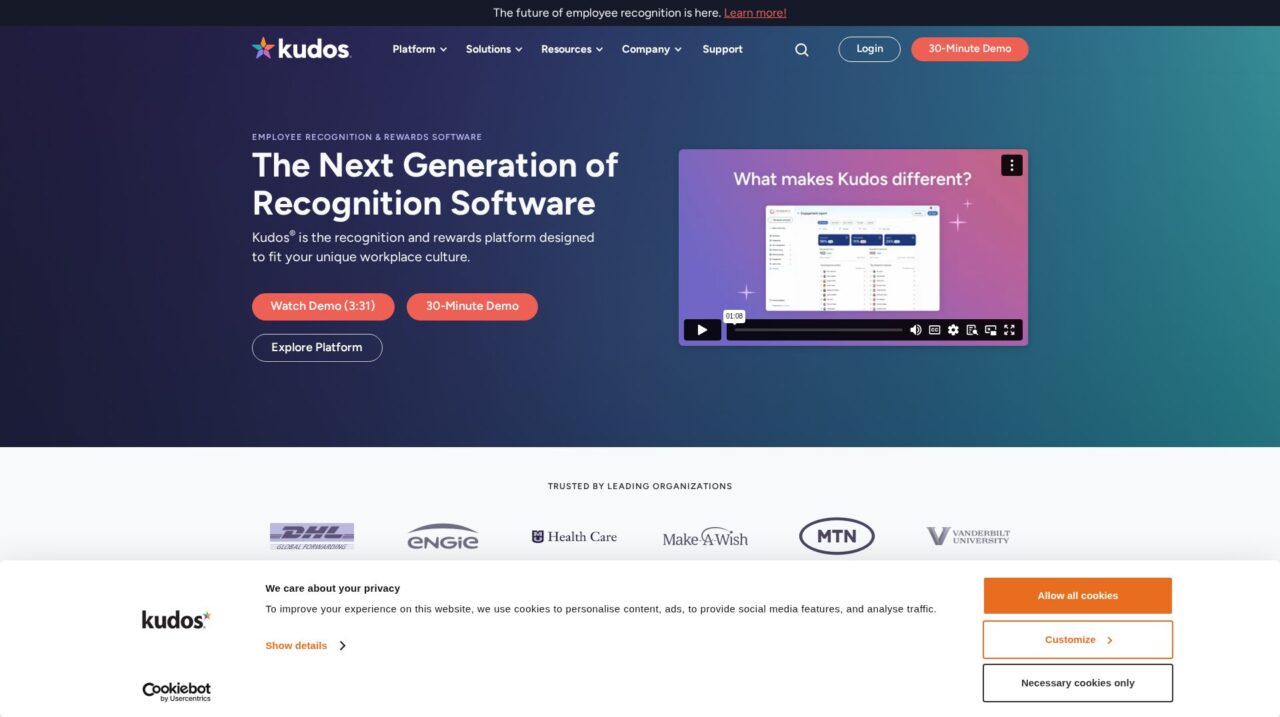

Kudos is an employee recognition and rewards platform that helps organizations build a culture of appreciation, align behavior to values, and track engagement with analytics.
We have taken a close look at Kudos to understand how well it actually supports employee recognition, rewards, and culture building in real organizations. This review is our practical evaluation of where it excels, where it falls short, and how it compares to other recognition tools. If you are still exploring the space, you may also want to look at our broader comparison of employee engagement and feedback platforms in our employee-engagement-software roundup.
Kudos is a well known name in the employee recognition space, especially among HR and People teams looking to formalize recognition programs and connect them to company values. Despite its reputation, buyers still need clarity on whether it will fit their specific size, culture, and tech stack, and what tradeoffs they are making versus alternatives.
In this review, you will learn the core pros and cons, the key features that matter in daily workflows, and the types of organizations that tend to get the best return on investment. The goal is to give HR leaders, managers, and executives enough context to decide whether Kudos is the right recognition layer to add to their people strategy.
Kudos is primarily aimed at mid sized and enterprise organizations with distributed teams, where informal recognition no longer scales and leadership wants structured programs with measurable impact. It focuses on solving the problem of low visibility into everyday contributions by turning recognition into a shared, digital experience that also powers culture analytics for HR and executives.
Kudos Review Summary
Overall, Kudos is a mature, focused employee recognition and rewards platform that goes beyond simple points for perks. Its strongest attributes are the way it anchors recognition in company values, the ease with which employees can recognize one another, and the analytics HR and executive teams gain around engagement and culture. Adoption tends to be strong because the user experience feels familiar and rewarding.
At the same time, success with Kudos depends on viewing it as a strategic culture tool rather than just a perk. You will need to invest time in program design, integration, and change management to see full value. Organizations seeking an all in one HR suite, or very small teams looking for something extremely lightweight, may find other options a better match. For mid sized and larger organizations that want best of breed recognition tightly aligned with culture and values, Kudos is a compelling option.
How We Review Tools and Assign the CX Score
We've developed a comprehensive scoring system to evaluate software tools objectively. Our CX Score (1.0–5.0) reflects how strong a product is within its category, based on hands-on testing and analysis across multiple criteria.
Core Functionality
Does the tool deliver the essential features users expect? We assess whether core capabilities meet category standards and if key features are accessible across pricing tiers.
Standout Features
We evaluate unique capabilities that go beyond the basics—features that make the product faster, more efficient, or offer additional value compared to competitors.
Ease of Use
How intuitive is the interface? We consider design quality, mobile apps, templates, and whether complex tasks feel simple to execute.
Onboarding
We measure how quickly new users can get productive with minimal training. High-scoring tools require little to no external support to get started.
Integrations
We assess native integrations, third-party connections, and API access. Tools that connect easily with common tech stacks score higher.
Customer Support
How easy is it to get help? We evaluate support channels, response times, and quality of documentation. Real-time human support scores best.
Value for Money
We compare pricing against features delivered. Software that offers more functionality at competitive prices receives higher marks.
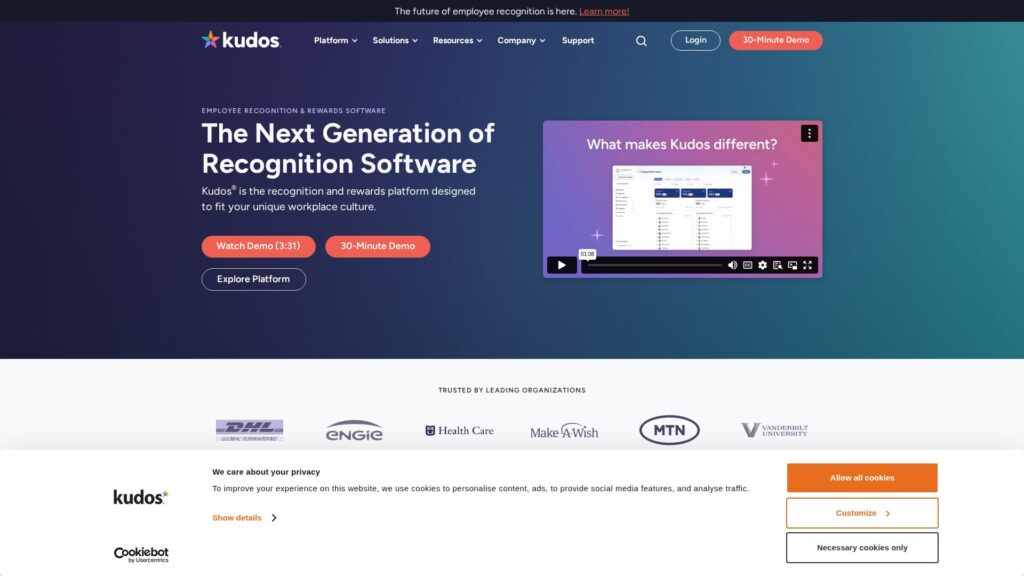
Features of Kudos
- Peer-to-peer recognition
- Manager-to-employee recognition
- Points-based rewards
- Gift card and merchandise catalog
- Automated birthdays and anniversaries
- Company values tagging in recognition
- Team and company-wide recognition feeds
- Mobile access
- HRIS integration
- Slack or Teams integration
- Analytics and reporting dashboards
- Multi-location support
- Single sign-on (SSO)
- Open API
- Performance review module
- Payroll processing
- Time tracking
- On-premise deployment
- Employee surveys
- Gamification elements
Peer to Peer and Manager Driven Recognition That Feels Natural
Kudos centers on a social style recognition feed where employees and managers can send messages that highlight specific contributions. Messages can be enriched with tags, values, or categories to make clear what behavior is being celebrated. This familiar, feed based design lowers the barrier to participation compared with clunky HR portals, and it encourages ongoing micro recognition rather than sporadic annual awards.
Compared with basic recognition widgets, Kudos gives managers more structure while still feeling lightweight to end users. By defining recognition types and tying them to values or competencies, you can nudge people to recognize in ways that reinforce the culture you want, not just generic “thank you” notes.
Automated Milestones and Celebrations to Keep Momentum
One of the persistent challenges in recognition programs is consistency; enthusiasm is high at launch and then slowly fades. Kudos addresses this with automated celebrations for milestones such as work anniversaries and birthdays. Once configured, these events trigger recognition prompts or posts, ensuring that important dates never slip through the cracks.
Automations give HR teams time back while keeping the recognition feed active. This is particularly valuable in larger or distributed organizations where manually tracking and coordinating milestones across locations or time zones would be difficult. It also makes sure that quieter employees still receive visible appreciation at predictable moments.
Centralized Awards, Incentives, and Rewards Catalogs
Kudos includes a robust rewards layer that allows organizations to attach points or tangible incentives to recognition, subject to configurable rules and budgets. HR teams can run centralized awards programs, set point allowances, and control which recognition types are reward eligible. Employees can redeem accumulated points in a catalog that typically offers options like gift cards or merchandise, depending on how the program is set up.
This centralization simplifies what is otherwise a messy process of ad hoc gift cards, expense reimbursements, and inconsistent practices across teams. Compared with more bare bones recognition tools that leave rewards to manual handling, Kudos offers a more scalable and auditable system for incentives.
Culture and Engagement Analytics for HR and Leadership
Beyond feel good stories, Kudos provides analytics showing how recognition flows through the organization. Dashboards typically surface metrics such as participation rates, recognition frequency, top recognizers and recipients, and activity by department or location. Since recognition can be tagged to company values, you can also assess which values are most or least frequently referenced in day to day behavior.
These insights help HR and executives identify strengths and gaps in engagement that traditional annual surveys might miss. Relative to lighter tools that only report basic counts, Kudos pushes further into culture analytics, which can be particularly powerful when combined with other HR data for deeper analysis.
Program Administration and Governance for HR Teams
Kudos includes administration tools designed for HR and People teams that own recognition strategy. Admins can configure recognition types, set up automated campaigns, define reward budgets and approval workflows, and manage communication templates for program launches and ongoing nudges. Role based access controls help ensure the right level of control and visibility for HR, managers, and employees.
Compared with ad hoc or manually run programs, this governance layer is a significant upgrade, especially in regulated or compliance conscious industries where tracking and auditing rewards is important. It also makes it feasible to operate a global or multi location recognition program without each region reinventing the wheel.
Support for Distributed, Hybrid, and Cross Functional Teams
Kudos is built with distributed work in mind, ensuring that recognition is not dependent on physical proximity. The social feed, notifications, and digital rewards experience mean that remote employees are as visible and celebrated as those in the office. Team based celebrations and visibility into cross team recognition help break down silos and make contributions from different departments more apparent.
Compared with in person only recognition rituals or systems locked away in a back office HR tool, Kudos gives everyone equal access to the appreciation stream, which is increasingly critical as organizations adopt hybrid models.
From an end user perspective, Kudos is designed to be easy to learn and use. The interface borrows patterns from consumer social platforms, so most employees can quickly understand how to send recognition, browse the feed, and redeem rewards with minimal training. Mobile and web access ensure employees can participate from wherever they work, and automated prompts help those who might otherwise forget to recognize colleagues.
For HR and program owners, the initial configuration and ongoing administration require more effort but are still manageable for a typical People team. Setting up recognition frameworks, defining values, configuring reward rules, and connecting to existing tools is where the main implementation work sits. Organizations that invest early in a thoughtful program design usually find day to day administration fairly straightforward, while those that skip planning may experience confusion around budgets and expectations. Overall, the learning curve is moderate and appropriate for the depth of functionality.
Kudos is typically deployed as part of a broader HR and collaboration stack, so integration options are an important consideration. The platform commonly integrates with communication tools such as Microsoft Teams or Slack to surface recognition in the channels where employees already spend time, which significantly improves adoption. It also can connect to HRIS systems to sync user data, departments, and key dates like hire anniversaries, reducing manual data maintenance for HR.
Specific integration availability can vary by plan and implementation, so buyers should confirm support for their core systems, such as their HRIS, SSO provider, and collaboration tools. It is also worth asking about API access if you plan to pull recognition data into a data warehouse or BI tool for deeper analysis. Where native integrations exist, they are generally focused on making recognition more visible and automating key inputs rather than replacing HR systems outright.
Kudos Overview
Pros
- Strong focus on culture and values based recognition, not just points and perks
- Social, feed based interface drives high employee adoption and participation
- Automated milestones and celebrations reduce HR admin workload
- Centralized reward budgets and catalogs simplify incentives management
- Robust analytics give HR and executives insight into engagement patterns
- Well suited for distributed and remote teams needing digital recognition
- Flexible enough to support both peer recognition and formal awards
Cons
- Not a full HR suite, must be paired with an HRIS and other tools
- Requires upfront program design for values, budgets, and rules to shine
- May be more robust than very small teams with simple needs require
- Pricing details are typically sales led, limiting quick cost comparisons
Kudos: Frequently Asked Questions
What is Kudos used for in organizations?
Kudos is used to run structured employee recognition and rewards programs that reinforce company values, improve engagement, and give HR and leaders visibility into culture and participation.
Is Kudos a full HR system or just recognition software?
Kudos is primarily recognition and rewards software; it is not a complete HRIS and is usually used alongside existing HR and payroll systems.
What size companies is Kudos best suited for?
Kudos tends to work best for mid sized and larger organizations where informal recognition no longer scales and HR teams want centralized program management and analytics.
Can Kudos support remote and distributed teams?
Yes, Kudos is well suited to remote and hybrid organizations, since recognition happens in a digital feed and through integrated collaboration tools, making contributions visible regardless of location.
Does Kudos offer reporting and analytics on recognition activity?
Yes, Kudos provides dashboards and reports that show participation, recognition trends, and values alignment, helping HR and leaders understand engagement across teams.
Can we customize Kudos to match our company values and branding?
Kudos allows you to configure recognition types and tie them directly to your company values, and offers branding options so the experience aligns with your culture.
Does Kudos replace bonuses or compensation programs?
Kudos is not a compensation system; it complements existing rewards and compensation by adding structured recognition and lighter weight incentives, rather than replacing bonus or salary structures.
How difficult is it to implement Kudos?
End user adoption is typically easy, but HR teams should expect to spend time on program design, configuration, and integrations to realize the platform’s full potential.
